30 days refund guarantee
Copsford - Nature Classics Library
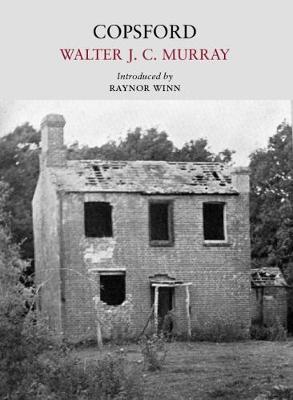
Copsford - Nature Classics Library
paperback
Published:
4 April, 2019
paperback
Published:
4 April, 2019

FREE Delivery by
Thu, April 9 - Fri, April 10
Order within
0

Eligible for Express Delivery by
Wed, April 8
Order within
0

Condition:
NEW
£11.83
RRP
£14.00
You save £2.17 (16%)
Available
11
in stock
FREE Returns within 30 days
Description
Walter Murray was a young man tired of living in the city. Early in the 1920s, he persuaded a Sussex farmer to rent him a derelict cottage, which stood alone on a hill, with no running water or electricity. Most of the windows were broken, it was dirty, dark and ran with rats. He bought a brush and pail in the village, forced the rats to retreat, brought in rudimentary furniture. The local postman found him a dog, and with his new companion he began to explore his surroundings. In that year at Copsford he made a living from collecting, drying and selling the herbs he found locally: agrimony, meadow-sweet and yarrow. He became alert to the wildlife and plants around him. His life was hard - he supplemented his income with occasional journalism, but it was here he met his future wife, who he calls The Music Mistress, and with whom he would later found a school. Copsford is an extraordinary book. Bearing comparison to Thoreau's Walden, Murray's intense feeling for his place is evident on every page. It is, though, no simple story of a rural idyll - life at Copsford was hard, and Murray does not shy away from the occasional terrors of a house that had its hauntings. A publishing success when first published in the late 1940s, this new edition has an introduction by Raynor Winn, author of The Salt Path.
More Details
| Type | Book |
|---|---|
| ISBN13 | 9781908213709 |
| ISBN10 | 1908213701 |
| Number Of Pages | 168 |
| Item Weight | 1000 g |
| Publisher / Reseller | Little Toller Books |
| Format | paperback |
See More +
Author's Bio
Walter Murray (1900-1985) was a writer whose work has been compared Richard Jefferies. He served in the first world war, and thereafter lived in Sussex for the remainder of his life, becoming a school teacher and eventually headmaster of a small private school. His best known work is Copsford.